Choosing an eyeliner supplier involves more than comparing prices, colors, and factory photographs. China’s leading eyeliner manufacturers serve private-label brands, retailers, and professional makeup companies worldwide. Their strengths can include precise formulation, flexible packaging, high production capacity, and responsive sample development. However, supplier claims still require careful verification.
A common consumer question is, “why do my eyes water when I wear eyeliner on the waterline”? The answer may involve fragrance, pigments, preservatives, waxes, poor application technique, or individual sensitivity. The waterline sits close to the tear film, so even a small amount of product can cause stinging. A pencil may feel smooth on the hand but drag against the delicate inner lid. That difference matters.
This guide introduces ten notable Chinese eyeliner suppliers and examines their practical capabilities. It considers product consistency, ingredient transparency, manufacturing experience, packaging control, testing procedures, and export support. Reliable suppliers should provide clear ingredient lists, batch records, safety documents, and appropriate quality testing. They should also explain how they manage microbial risks and foreign particles.
No ranking can fit every buyer.
A supplier suitable for a large retailer may not suit a small cosmetics brand. Minimum order quantities, formula ownership, certification scope, and communication quality can change the final decision. My assessment may also miss regional strengths or newer manufacturers. Buyers should request samples, review documentation, and conduct independent testing before placing commercial orders. If eyeliner repeatedly causes watering, remove it and consult an eye-care professional, especially when redness, pain, swelling, or blurred vision appears.
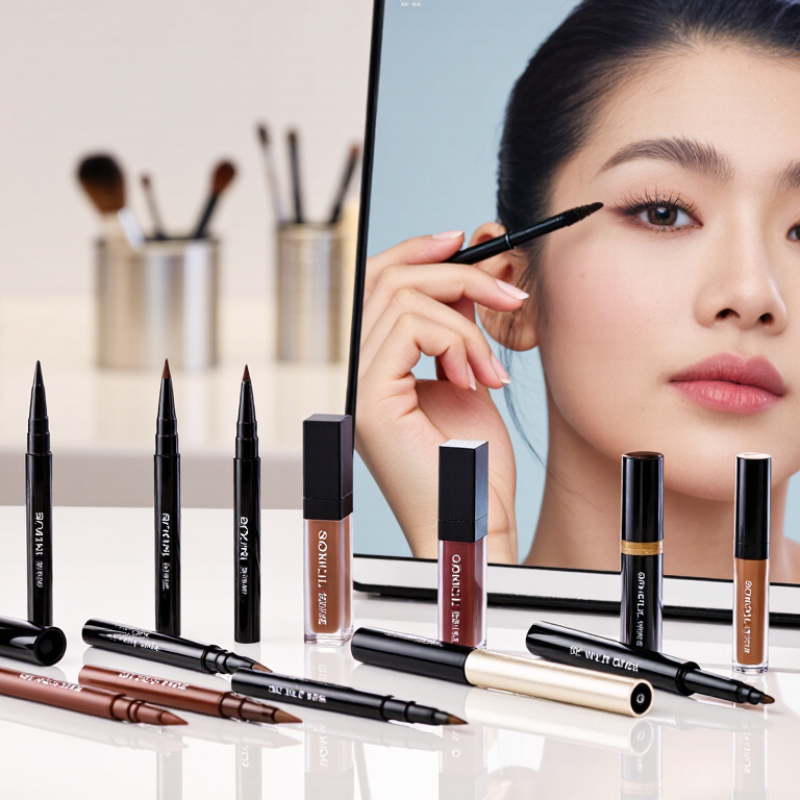
China has become a leading source of eyeliner because its supply chain is unusually complete. Pigment makers, tube producers, brush workshops, filling facilities, and packaging suppliers often operate within reachable distances. This structure shortens development cycles and helps buyers compare formulas, applicators, and prices. Small details matter. A factory can adjust a felt tip, gel texture, or drying speed after controlled sample reviews. Large production capacity also supports steady replenishment for overseas retailers.
However, low cost alone does not explain reliable eyeliner sourcing. Professional suppliers should document ingredient specifications, batch records, stability checks, and microbial testing. For products used near the eyes, responsible teams should assess irritation risk and maintain clean filling conditions. Buyers should request samples from several batches, not only one attractive prototype. That step can reveal uneven flow, a sharp tip, or color changes after heat exposure. Ask for clear manufacturing and quality documents.
Eye watering may come from fragrance, volatile solvents, pigment impurities, a dry formula, or personal sensitivity. It may also reflect application too close to the waterline. China’s advantage is not automatic quality. It depends on supplier screening, transparent testing, trained technicians, and honest communication. In practice, a supplier may meet the brief yet miss the user’s comfort expectations. That is an uncomfortable but useful reminder. Better sourcing leaves room for reformulation, feedback, and patience.
Watery eyes may come from fragrance, pigments, preservatives, or a poorly fitted applicator. Supplier selection matters. Grand View Research estimated the global eyeliner products market at about USD 3.5 billion in 2023, with continued growth expected through 2030. Rising demand also increases pressure on factories to deliver quickly. Speed alone is not quality.
To identify China’s top ten eyeliner suppliers, verify measurable evidence. Request ISO 22716 manufacturing records, recent stability tests, microbial results, and ingredient specifications. Check whether the factory controls raw-material batches and records filling temperatures. Ask for samples from three separate production lots. Compare drying time, tip flexibility, odor, and removal comfort. A supplier should explain why a formula may irritate sensitive eyes. Vague answers are warning signs.
Review the factory’s export history, laboratory equipment, quality team, and corrective-action records. The ISO Survey reports millions of certified management-system certificates worldwide, but certification does not guarantee a perfect eyeliner. It only shows a controlled framework. That distinction matters. Intertek and other cosmetics testing laboratories also emphasize safety, stability, and contaminant screening for eye-area products. Do not accept a polished certificate image without verification. A spreadsheet can flatter a weak supplier. I would also conduct a small wearer trial, because laboratory results cannot predict every watery eye. This step is slower. It is still necessary.
Watery eyes after applying eyeliner often point to irritation, allergy, or a formula that does not suit your eye area. Fragrance is a frequent concern, especially in products with a strong scent. Preservatives can also bother sensitive skin or eyes. Common examples include certain parabens, phenoxyethanol, and formaldehyde-releasing agents. Sensitivity differs widely.
Waterproof formulas deserve extra attention. They may contain film-forming polymers, waxes, and volatile solvents that create a tight, dry feeling. That dryness can make the eyes produce more tears. Glitter particles and poorly milled pigments may scratch or irritate the delicate eyelid margin. Carbon-based black pigments are usually considered suitable when properly manufactured, but contamination or poor quality control remains a concern. Ingredient names alone cannot prove product safety.
Look for a complete ingredient list, batch information, and eye-area safety testing when comparing suppliers. Choose fragrance-free formulas when possible. Apply eyeliner outside the inner waterline, and replace old products regularly. Do not share eye makeup.
Stop using the product if burning, swelling, discharge, or persistent watering appears. A cool compress may provide temporary comfort. Seek professional medical advice if symptoms continue.
Patch testing can help, but it cannot predict every eye reaction. I used to view “hypoallergenic” wording as reassuring; it is not a guarantee. Manufacturing records, stability testing, and transparent documentation matter more. Clean application tools matter too. Tiny details can change the experience.
Watery eyes after eyeliner do not automatically mean a defective product. Irritation is more likely when tearing begins within minutes of application, with stinging, redness, or a gritty feeling. Formula residue may enter the tear film, especially along the inner lash line. The TFOS DEWS II Epidemiology Report estimates dry-eye symptoms affect roughly 5% to 50% of adults worldwide. Dry eye can also trigger excessive reflex tears, which makes diagnosis less obvious. A quick home test is not enough.
Look for patterns. Symptoms in both eyes after one eyeliner session suggest product contact or application technique. Seasonal itching, sneezing, or clear discharge may suggest allergy. One-sided watering, persistent pain, swelling, light sensitivity, or blurred vision needs professional assessment. The American Academy of Ophthalmology advises stopping suspected cosmetics and seeking care when symptoms persist or vision changes occur. Product safety still depends on manufacturing controls, batch testing, and clean application practices. Supplier certificates alone cannot replace independent quality checks.
Tips: Remove the eyeliner gently, then rinse with clean water or sterile saline. Do not rub. Stop using it for several days and record when symptoms appear. Avoid sharing eye cosmetics, and replace products with changed smell, texture, or contamination. Patch testing on skin may miss eye-area reactions. An ophthalmologist or dermatologist can assess allergy, dry eye, infection, or blocked tear drainage. Be cautious; the first explanation may be wrong.
This chart compares common clinical clues associated with watery eyes. A value of 1 means the symptom is commonly associated with the condition; 0 means it is not a typical distinguishing feature. These are symptom patterns, not prevalence rates.
Product irritation more often causes immediate burning or stinging and redness after application. Prominent itching may suggest allergy, while sticky discharge is more suggestive of infection. Persistent one-sided watering can occur with a blocked tear duct. Stop using a suspected irritant and seek medical care for severe pain, light sensitivity, vision changes, or symptoms that do not improve.
General symptom patterns summarized from ophthalmology and public-health guidance, including the American Academy of Ophthalmology and NHS.
China’s eyeliner suppliers differ widely in testing discipline, not only in price. Watery eyes may result from fragrance, volatile solvents, pigment impurities, microbial growth, or a poorly fitting applicator. The European Commission’s SCCS Notes of Guidance, 12th revision (2023), emphasizes exposure assessment, impurity control, and specific attention to products used near the eyes. A safe supplier should understand these risks before production begins.
Ask for ISO 22716-based GMP records, ingredient specifications, allergen information, and batch-level certificates of analysis. For liquid eyeliner, request microbial limits, preservative-efficacy results, stability data, and packaging compatibility tests. ISO 17516:2014 classifies eye-area cosmetics as higher-risk products. It recommends total aerobic microbial counts below 100 CFU per gram or millilitre, with specified pathogens absent in one gram or millilitre. These details matter. A polished factory tour does not prove product safety.
Tips: Check whether each batch has traceable raw-material records. Request retained samples and complaint-response procedures. Test the product on sensitive skin under professional supervision, not directly inside the waterline. Review the full ingredient list for fragrance and avoid unclear “proprietary blend” wording. A supplier promising zero irritation may sound reassuring, but it is not scientifically realistic. Even good formulas can fail after heat, freezing, or repeated opening. My own practical concern is often the applicator: rough fibres can scratch the eyelid, while a loose cap can invite contamination. Selection should reward evidence, not attractive claims.
Request ISO 22716 records, stability tests, microbial results, and complete ingredient specifications. Ask about batch control and filling temperatures. Vague answers are warning signs.
No. Verify the certificate directly and review recent production records. Certification shows controlled processes, not perfect eyeliner. That distinction matters.
Samples from three lots can reveal differences in drying time, odor, pigment, and tip flexibility. A single sample may look unusually good. That can mislead you.
Fragrance, preservatives, solvents, and some pigments may irritate sensitive eyes. Film-forming polymers and waxes can create dryness. Sensitivity differs widely.
Yes. Waterproof formulas may feel tight or dry around the eyelids. Dryness can trigger reflex tears. Glitter or poorly milled pigments may cause scratching.
Irritation often begins within minutes, with stinging, redness, or gritty sensations. Both eyes reacting after application suggests contact or technique. The first explanation may be wrong.
Seek professional advice for persistent pain, swelling, light sensitivity, discharge, or blurred vision. One-sided watering also deserves attention. Do not keep testing the product.
Remove it gently and rinse with clean water or sterile saline. Do not rub your eyes. Stop using the product for several days and record symptoms.
No. Skin patch testing may miss eye-area reactions. A small wearer trial adds useful evidence, but it cannot predict everyone’s response. I once trusted “hypoallergenic” wording too quickly.
China has become a leading source of eyeliner products because its manufacturers offer diverse formulations, flexible customization, efficient production, and strong packaging capabilities. To identify the top 10 eyeliner suppliers in China, buyers should evaluate manufacturing experience, quality-control systems, ingredient transparency, product testing, production capacity, certifications, and communication standards rather than relying only on price. Reliable suppliers should also provide samples and clear information about formula stability, application performance, and packaging safety.
Watery eyes may result from fragrances, certain preservatives, pigments, alcohol, waterproof solvents, or ingredients that migrate into the tear film. If you wonder, “why do my eyes water when I wear eyeliner on the waterline,” the cause may be direct contact irritation, sensitivity, an unsuitable formula, expired makeup, or another eye-related condition. A safe choice involves selecting eye-friendly, ophthalmologically tested products, checking ingredient lists, avoiding products with an unusual odor or texture, and stopping use if discomfort occurs. Suppliers that prioritize testing, traceability, and responsive support are better positioned to provide safe and comfortable eyeliner products.
